Rosatom and Russian Environmental Operator will cooperate on projects to build biogas reactors in Russia
19.06.2025

Rosatom and Russian Environmental Operator will cooperate on projects to build biogas reactors in Russia. The use of modern biogas technologies allows to create a closed-loop economy and improve the environmental situation in the country.
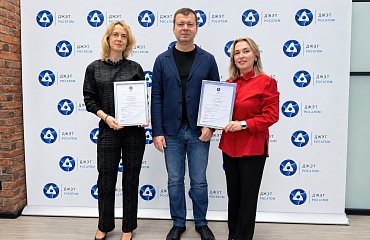
On June 19, at the St. Petersburg International Economic Forum (SPIEF-2025), Rosatom Service JSC (part of the Electric Power Division of Rosatom State Corporation) and Russian Environmental Operator, a public-law company for the development of a comprehensive solid municipal waste management system (PLC REO) laid the foundations for cooperation in the field of introducing biogas plants for the purpose of organic waste disposal.
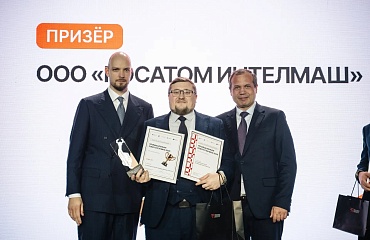
The agreement was signed on behalf of Rosatom Service JSC by CEO Evgeny Salkov, while PLC REO was represented by CEO Irina Tarasova. The document was signed in the presence of Kirill Komarov, First Deputy Director General and Director of the Development and International Business Division of Rosatom State Corporation, and Denis Butsaev, Deputy Minister of Natural Resources and Environment of the Russian Federation.
The parties have signed an agreement on cooperation in the field of biogas plant implementation to dispose of organic waste as part of the closed-loop economy concept. The signed document will enable joint implementation of projects to build biogas power plants in regions of the Russian Federation, including support measures from PLC REO in the form of preferential financing.
“The biogas reactor construction projects being implemented by Rosatom are a striking example of how modern technologies are making an environmentally friendly future possible for humanity. This includes creating a closed-loop economic infrastructure and developing a national bioeconomy project, the aim of which is to increase our country's competitiveness and create comfortable living conditions for our citizens" noted Evgeny Salkov.
“Biogas reactors are an important element of the closed-loop economy. They enable organic waste to be safely processed and converted into a valuable resource—biogas. This helps reduce waste disposal volumes and develop renewable energy in Russia. The agreement is an important step toward achieving these goals" noted Irina Tarasova.
For reference:
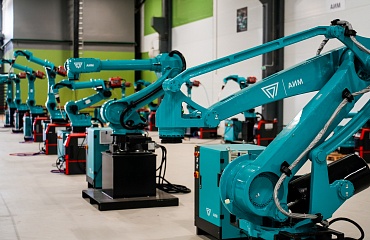
The Electric Power Division of Rosatom State Corporation (the management company is Rosenergoatom Concern JSC) is the largest producer of low-carbon electric power in Russia. It operates 11 functioning nuclear power plants, including the world’s only floating nuclear thermal power plant (FNPP). 35 power units with a total capacity of 28.5 GW already generate about 19 % of electricity in Russia. Division enterprises provide a full range of services for commissioning, repair, maintenance and training of personnel for nuclear power units; they produce isotopes for medicine, agriculture and microelectronics; new areas of activity are actively developing within its framework (development of a network of charging infrastructure for electric vehicles, biogas stations, production of industrial robots, etc.). www.rosenergoatom.ru
Rosatom Service JSC (part of the Electric Power Division of Rosatom State Corporation) provides servicing to energy facilities in various power industries. The company is present in almost every country with operating VVER NPP outside Russia. The geography of Rosatom Service JSC projects covers more than 15 countries around the world: from Europe to Asia. The references of Rosatom Service JSC include comprehensive projects for service life extension, maintenance and repair, supply of equipment and SPTA, robotics, digital modeling, consulting services, and training. The company has been actively developing renewable energy sources since 2022, focusing on small hydropower and biogas reactors. The BOO (Build-Own-Operate) model is implemented as a priority. Rosatom Service JSC references in the renewable energy sector include the design of a cascade of hydroelectric power plants in Bulgaria, the supply of equipment for the Segozerskaya HPP in Karelia. In the near future the company also plans to become a key business player in the construction of high capacity bioreactors, implementing the development strategy of Rosatom State Corporation using green energy.
The public law company Russian Environmental Operator was established by Presidential Decree on January 14, 2019. The key task of REO is to develop a comprehensive system for managing solid municipal waste (SMW) in Russia. A new national project, “Ecological Well-Being”, will replace the national project “Ecology”, which ends in 2024, in the Russian Federation starting in 2025. One of its areas of focus is the task of creating a closed-loop economy that will ensure that by 2030, 100% of the municipal solid waste generated annually will be sorted, no more than 50% of such waste will be landfilled, and at least 25% of production and consumption waste will be recycled as secondary resources and raw materials.
Large domestic companies pay great attention to the implementation of environmental management projects. Rosatom State Corporation producing electricity through low-carbon generation is consistently implementing steps to transition to a green economy.
Last news